

I still remember the first time I actually paid attention while eating a mango — not the nutrition label, not the calories, but the whole experience. It was a rough afternoon, and that one piece of fruit somehow made things better. That got me curious: is there something genuinely psychological happening here, beyond just "eating healthy"?
Turns out, yes — and the science is more interesting than most nutrition content lets on. From the colours that signal safety to your brain, to the gut bacteria that quietly regulate your emotions, fruit works on your mind in ways that are both real and surprisingly deep.
"We spend a lot of time talking about what fruit does for our bodies. We rarely talk about what it does for our minds."

1. The Colour Effect: Your Brain Reads Food Before You Taste It
Before a single bite, your brain has already formed a full opinion about what you're eating. Colour psychology is well-established in food science, and fruit, more than almost anything else we eat, speaks to us through colour in remarkably direct ways.
The vivid reds, electric oranges, and deep purples of ripe fruit didn't evolve by accident. They signal abundance, ripeness, and safety. A plate of colourful fruit feels inherently good, even before taste enters the picture.
🍓 Reds — Energy & Vitality
Strawberries, cherries, raspberries. Red activates alertness. Psychologists link it with motivation, passion, and a sense of energy that primes us for action.
🍊 Orange & Yellow — Joy & Warmth
Mangoes, oranges, bananas. "Sunshine colours" are clinically associated with optimism and lifted mood — even just viewing them triggers a positive association.
🥝 Greens — Calm & Freshness
Kiwis, grapes, green apples. Green triggers a gentle physiological relaxation response — the colour we most associate with nature and restoration.
🫐 Blues & Purples — Peace & Depth
Blueberries, figs, plums. Visually calming and associated with both serenity and cognitive sharpness in colour psychology studies.
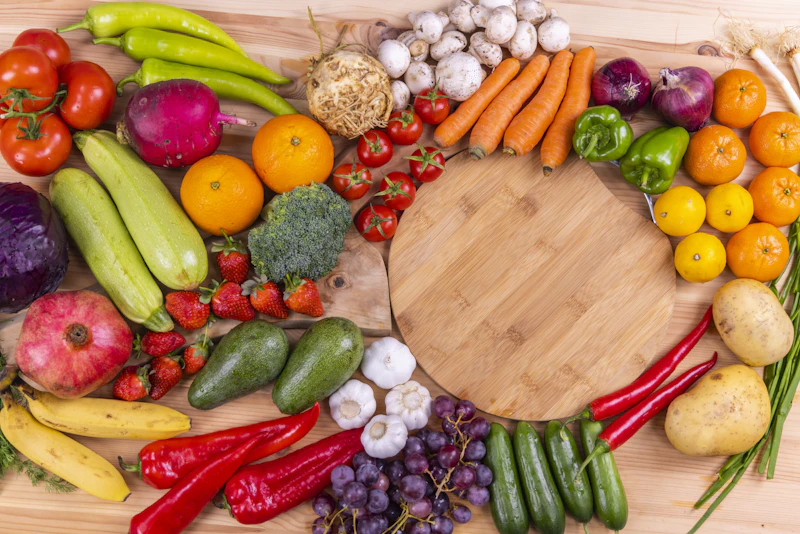
"Eating the rainbow" isn't just a health cliché — it's a genuinely smart way to use visual variety to shift how your meals feel. When food looks beautiful, you feel better about eating it, and that positive framing has measurable effects on satisfaction and mood after eating.
2. What's Actually Happening in Your Brain When You Eat Fruit
This is where a lot of wellness articles get vague. So let's be specific. The mood benefits of fruit aren't metaphorical — there are concrete biological mechanisms at work.
Natural Sugar vs. Refined Sugar: A Critical Difference
When you eat a biscuit or a chocolate bar, refined sugar hits your bloodstream fast. You get a blood glucose spike, feel temporarily sharp or even euphoric, and then crash — often harder than your starting point. That post-crash irritability and fatigue? That's not a weakness. It's biochemistry.
Fruit works differently. Its natural sugars come packaged with fibre, water, and micronutrients that slow absorption considerably. The result is a steady, longer-lasting energy curve. Your mood stabilises because your blood sugar stabilises.

The Nutrients That Directly Feed Your Brain Chemistry
The Gut–Brain Axis: The Most Underrated Part
Researchers have established what's now called the "gut-brain axis" — a direct communication pathway between your digestive system and your brain, primarily via the vagus nerve. Approximately 90% of your body's serotonin is produced in the gut, not the brain. The health of your gut microbiome directly influences this production, and fruit is one of the richest natural sources of prebiotic fibre that feeds the beneficial bacteria responsible for it.
Multiple studies link a diverse, fibre-rich diet to significantly lower rates of depression and anxiety. When you eat fruit consistently, you're supporting the biological infrastructure that regulates mood — not just "eating well" in the abstract.

3. The Craving Psychology — Why Fruit Actually Satisfies
Most of us aren't craving junk food because of poor willpower. We crave it because our brains evolved to seek sweetness and fast energy — and the modern food environment is extraordinarily well-designed to deliver both in highly concentrated forms.
Fruit engages the same reward pathways — natural sweetness activates dopamine release much as other sweet foods do — but without the neurological backlash. The fibre slows digestion,s o the reward feeling lasts longer. You feel genuinely satisfied rather than briefly sated and immediately hungry again. This is the craving loop that processed food is built on. Fruit quietly breaks it.
The Mindfulness Dimension
There's also something to be said for the tactile, sensory experience of eating fruit as a natural mindfulness moment. Peeling a clementine requires attention. Biting into a crisp apple is a small, full-body event. Washing and arranging a bowl of berries is oddly meditative. These small acts pull you out of autopilot — the semi-conscious state in which most overeating happens.
4. Seasons, Sharing, and the Deeper Psychology of Fruit
There's something no vitamin supplement can replicate: the feeling of eating food at exactly the right time and place. Strawberries in June taste different from strawberries in December — and it's not just ripeness. It's expectation, association, and the accumulated memories of summer.
Eating fruit in season connects you to a rhythm that moves faster than any news cycle: the cycle of the natural world. That connection is psychologically grounding in a way that's difficult to quantify but very easy to feel.
And then there's the social dimension. Fruit has always been a food of sharing — a bowl at a party, a bag of peaches from someone's garden, watermelon passed around at a summer gathering. These moments are part of why fruit carries such positive psychological weight, woven into memories of warmth, abundance, and ease.
✦ Key Takeaways
- Fruit colour sends real psychological signals before you eat — visual variety actively lifts mood
- Natural sugars + fibre create stable blood sugar, avoiding the crash-and-irritability cycle of refined sugar
- Key nutrients in fruit directly support serotonin production and reduce anxiety markers
- Fruit's prebiotic fibre supports gut health — now understood as central to emotional regulation
- The sensory act of eating fruit naturally invites mindfulness, breaking the autopilot craving loop
- Seasonal, shared eating connects you to nature and community — underrated sources of genuine well-being
5. Simple Ways to Use This in Your Day
Put fruit where you can see it. This is the most evidence-backed nudge in food behaviour science. Visible, accessible fruit gets eaten. Fruit hidden in a crisper drawer mostly doesn't. A bowl on the counter is a deliberate behavioural design choice, not just decoration.
Eat fruit before reaching for something processed. Not instead of — before. The 10-minute gap between craving and action is often enough for the impulse to pass, especially if you've eaten something genuinely satisfying in the meantime.
Slow down with it. At least occasionally, eat your fruit without a screen in front of you. Notice the smell, the texture, the actual taste. This genuinely changes how satisfied you feel afterwards.
Follow the seasons. Seasonal fruit almost always tastes better, costs less, and supports more sustainable farming. The anticipation of waiting for something is part of what makes it feel special when it arrives.
Frequently Asked Questions
Can eating fruit really improve your mood?
Yes — through multiple mechanisms. Fruit provides nutrients like Vitamin B6 and folate that support serotonin production, stabilises blood sugar to prevent mood crashes, and feeds gut bacteria linked to lower rates of anxiety and depression.
Feed stabilise. Which fruits are best for mental health?
Berries are high in antioxidants that reduce brain fog. Bananas provide Vitamin B6 for serotonin. Citrus fruits offer Vitamin C linked to mood improvement. Dates contain tryptophan, a serotonin precursor. Eating a variety across the week matters more than any single choice.
How is fruit sugar different from refined sugar for mood?
Fruit sugar comes packaged with fibre, water, and micronutrients that slow its absorption into the bloodstream. This prevents the blood sugar spike and crash associated with refined sugar — a crash that typically causes irritability, fatigue, and renewed cravings.
What is the gut–brain connection, and how does fruit help?
The gut-brain axis is a communication pathway between the digestive system and the brain. About 90% of the body's serotonin is produced in the gut, and the health of the gut microbiome directly influences mood. Fruit's prebiotic fibre feeds beneficial gut bacteria, supporting this mood-regulation system.
How much fruit should I eat per day for mental health benefits?
Most guidelines recommend 2–3 servings daily. For mood benefits, variety matters as much as quantity — different fruits provide different nutrients and prebiotic compounds. Focus on a range of colours across the week.